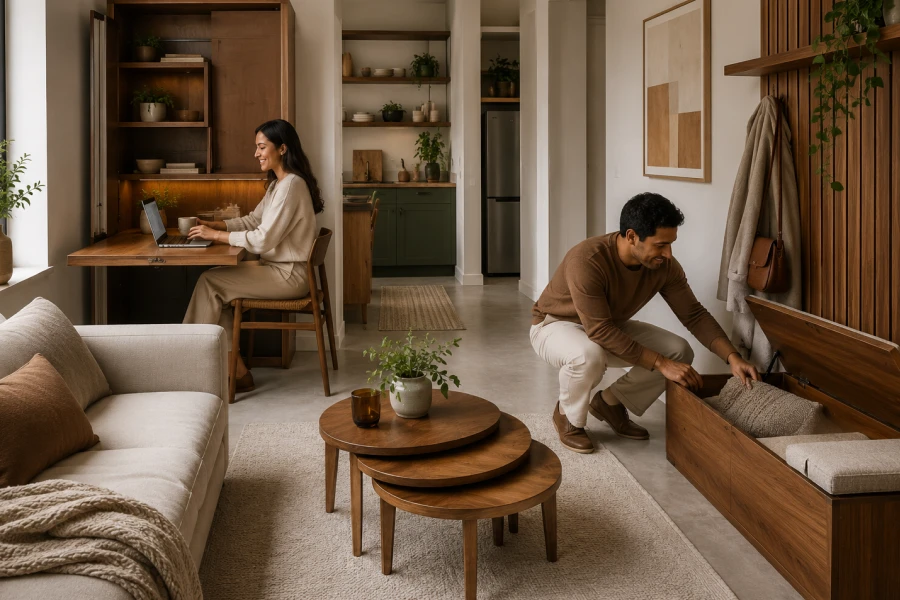
Many decorating mistakes happen before the first pillow or artwork appears. Knowing how to make a room look bigger starts with the structure of daily life. A room feels cramped when its layout forces people to weave around obstacles. It also feels smaller when visual weight collects in one corner. Begin by identifying what the room must do each day. Then remove furniture that does not support those activities. A clear purpose leads to clearer choices about storage and seating. Keep the main walking route obvious from every entrance. Choose fewer pieces with stronger proportions and better function. Once the room works well, decorating becomes much easier and more satisfying.
Every room benefits from a clear definition of its working zones. A living area can include reading, dining, or relaxing without becoming confusing. Use rugs, lighting, and furniture placement to suggest each purpose gently. Avoid dividing the room with tall shelves or bulky cabinets. Instead, use small space styling that creates separation without closing views. A narrow table behind a sofa can suggest a boundary. A floor lamp can distinguish a reading corner. Leave enough open floor around each zone for it to feel intentional. These soft boundaries make a compact room easier to understand. When the layout makes sense instantly, the space feels larger and more comfortable.
Color affects visual size because contrast directs attention and creates stops. Strongly contrasting walls can make a room feel segmented and compressed. Softer related tones allow surfaces to connect more naturally. Consider warm neutrals, muted greens, pale blues, or dusty clay shades. Continue one dominant tone across larger furniture whenever possible. This does not mean every item must match perfectly. It means the room should feel connected rather than broken into pieces. Small dark accents can still add depth and personality. Use them deliberately through lamps, frames, or a single upholstered chair. A cohesive palette gives the eye fewer interruptions and more room to travel.
Reflection can extend a room when it feels integrated into the design. A mirror opposite a window often doubles the impression of daylight. Glass-top tables can also reveal more floor beneath their surfaces. Choose polished accents carefully so the room remains warm instead of overly glossy. Try room expansion techniques that echo the architecture already present. A framed mirror can repeat the shape of a doorway. Metallic lamp bases can pick up warm evening light. Reflective details work best when they appear in small, intentional moments. Too many shiny surfaces can become distracting. The right balance makes the room feel brighter, deeper, and pleasantly alive.
One overhead fixture rarely gives a room the depth it deserves. Layer lighting at different heights to make corners feel considered and useful. Begin with ambient light that spreads softly across the full space. Add a table lamp where reading or conversation naturally happens. Include a lower accent light to soften the edge of the room. Look for brighter room strategies that support morning, afternoon, and evening use. Warm bulbs can make pale walls feel richer after sunset. Dimmer switches add flexibility without adding visual clutter. Good lighting creates depth where flat illumination creates fatigue. The room becomes more adaptable because its atmosphere can shift with the day.
Scale determines whether furniture feels tailored or accidental within a room. Oversized lampshades, deep chairs, and thick tables quickly consume visual capacity. Choose a few substantial pieces instead of several medium-heavy ones. Long, low furniture can make ceilings feel higher by comparison. Use scale-conscious decorating when mixing storage, seating, and artwork. Keep artwork proportional to the wall rather than merely filling blank space. Let curtains extend close to the ceiling and floor. Consider furniture legs that reveal the floor beneath. These choices build a clearer line of sight across the room. Better scale creates a sense of order before anyone notices the individual pieces.
You do not need a total renovation to change a room’s proportions. Start with one wall, one lighting issue, or one difficult furniture arrangement. Move pieces around before committing to a new purchase. Photograph the room from the doorway to see what actually feels crowded. Remove accessories for a few days and notice what you miss. Keep the pieces that offer comfort, beauty, or useful function. Return the rest only when they improve the room’s story. Small edits become powerful when they work together consistently. The best interiors feel collected over time rather than decorated overnight. Once you understand how to make a room look bigger, every decision becomes more purposeful.

Leave a comment