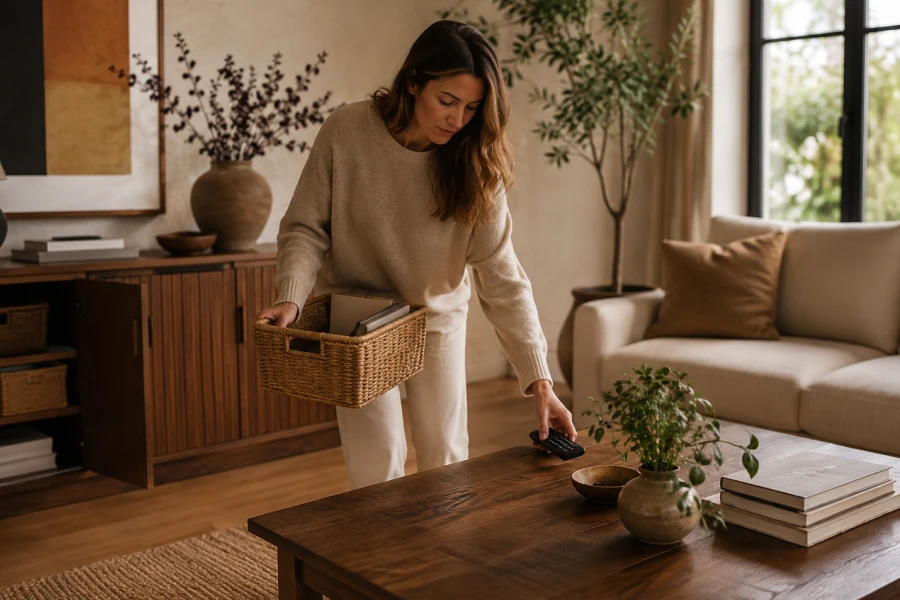
The living room often carries the visible evidence of a busy household. Living room decluttering helps that shared space return to its most useful role. It should be a place where people can rest, connect, and recharge. Instead, it easily becomes a landing zone for unfinished tasks and scattered belongings. Start by noticing what enters the room each day. Mail, bags, blankets, toys, and chargers all need a realistic destination. Do not begin by buying more containers or moving everything elsewhere. Begin by deciding what deserves to stay within reach. Once the room reflects actual routines, it becomes easier to maintain. Calm grows faster when the systems feel natural instead of strict.
Spend several days watching how the room is used before changing anything. Notice which surfaces collect clutter by evening. Pay attention to items that appear repeatedly without a consistent home. These patterns are more useful than a perfect-looking organization photo. Create living room organization habits around the real behavior of your household. Keep a small tray where remotes naturally land. Add a basket where throws already tend to gather. Give children a contained space for the toys that remain downstairs. The right system does not demand a personality change. It simply makes the easiest action the tidiest action.
A living room can support many activities without storing every category of life. Decide which functions belong there most often. Maybe the room is primarily for family conversation and quiet television time. Perhaps it doubles as a reading corner or a place for weekend guests. Once you name its core purpose, unnecessary objects become easier to identify. Keep items that support comfort, entertainment, or connection. Move work supplies, kitchen overflow, and random paperwork to more appropriate zones. This is not about creating a showroom. It is about protecting the room from taking responsibility for the entire house. A clear purpose keeps decisions practical and much less emotional.
Open shelves can be beautiful, but they require more editing than most homes expect. Closed storage offers an easier way to keep everyday items nearby and visually quiet. Use a media console for electronics, game accessories, and spare cords. Choose smart storage for living rooms that supports the things you actually use. A storage ottoman can hold blankets while adding extra seating. A cabinet with doors can hide less attractive necessities. Keep only a few objects visible on open shelves. This creates breathing room around the pieces you genuinely love. Closed storage reduces visual pressure without making the room feel impersonal. It gives daily life a softer, more forgiving backdrop.
Coffee tables and side tables collect clutter because they are convenient. Give each surface one simple boundary rather than expecting it to stay empty forever. A tray can contain remotes, candles, and one small decorative object. A lidded box can hold glasses cloths, chargers, or other minor essentials. Use basket storage solutions for items that move in and out of the room. Keep the basket sized to prevent it from becoming a permanent dumping ground. Clear the table at the same time each evening. That five-minute reset protects the feeling of the room. A visible surface should feel intentional, even when it remains useful. Small boundaries prevent clutter from becoming the room’s main visual story.
Some clutter is difficult because it carries memory rather than obvious function. You may keep gifts, family items, or unfinished projects because they feel meaningful. Begin by choosing the pieces that truly represent what you value. Then let the remaining items earn their place through beauty or usefulness. Use meaningful decor editing to create space around treasured objects. One framed family photo can feel stronger than a crowded shelf of reminders. A favorite heirloom can shine when it is not surrounded by visual competition. Keep memories, but release the pressure to display them all. Your room can honor the past while still supporting the present. Thoughtful editing helps the space feel personal, calm, and emotionally lighter.
Decluttering lasts when it becomes part of how the room closes each day. Set a simple evening reset that takes less than ten minutes. Return remotes, fold blankets, gather cups, and put loose items away. Ask everyone who uses the room to contribute one small action. Do not wait for a full cleanup day to restore order. Notice how much lighter the room feels after a quick reset. Keep the process kind enough to repeat on tired nights. A dependable habit matters more than a dramatic weekend overhaul. When the room is easy to reset, people are more likely to enjoy it fully. That is the real advantage of living room decluttering.


Leave a comment