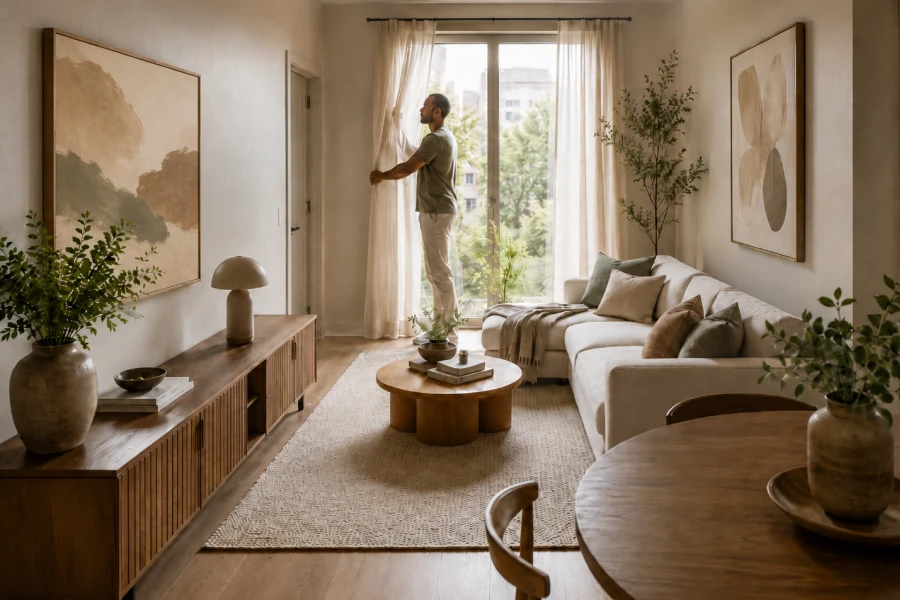
A home does not need more square footage to feel more capable. Thoughtful space-saving home design gives ordinary rooms a clearer rhythm and purpose. It asks each surface, corner, and piece of furniture to work harder. That does not mean every object must perform multiple complicated functions. Instead, it means your choices should support the way you really live. Start with daily habits rather than a trendy organizing formula. Notice where clutter gathers and where movement feels awkward. Build solutions around those moments instead of forcing a new routine. Small improvements become especially powerful when they remove repeated friction. A home feels larger when it helps rather than interrupts your day.
Pay attention to the tiny frustrations that happen without conscious thought. Perhaps bags land beside the door because there is no hook nearby. Maybe blankets gather on the sofa because storage feels too far away. These small patterns reveal where the room needs more support. Begin with interior design for small rooms that responds to realistic behavior. A narrow bench can create an entry drop zone. A lidded basket can keep throws close without looking messy. A wall-mounted lamp can free up a crowded side table. When the solution appears exactly where life happens, it actually gets used. Good design feels simple because it quietly solves problems before they become visible.
Flexible furniture lets rooms evolve without requiring constant rearrangement. An ottoman can provide seating, storage, or a casual coffee table. A fold-down desk can support work without claiming an entire room. Dining chairs can move into a living area when guests arrive. Look for furniture that feels attractive even when it is not performing every function. Avoid pieces that become complicated or inconvenient after their novelty fades. Choose wheels only when you will truly move the item often. Storage benches work well near entries, windows, and beds. Nesting tables give you useful surfaces without permanent bulk. The best flexible pieces make a room feel ready for change without looking temporary.
Visual heaviness can make a room feel full even when the floor remains clear. Thick arms, dark finishes, and dense patterns all add visual pressure. Balance those elements with open legs, light fabrics, and a relaxed palette. Use airy home decor to keep the atmosphere calm without making it bland. Natural textures such as linen, rattan, and pale wood add warmth. A few dark accents can ground the room beautifully. The key is leaving enough visual quiet around them. Choose one stronger pattern instead of layering several unrelated prints. When furniture and decor feel lighter together, the room gains a more effortless sense of volume.
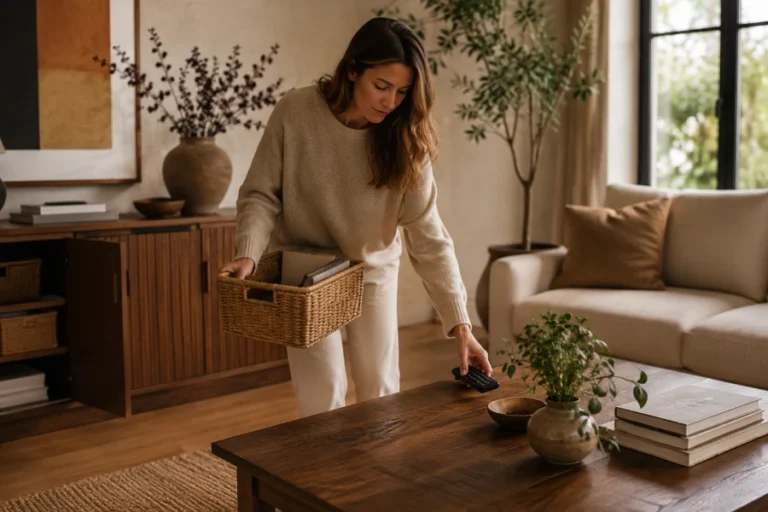
Storage looks best when it appears to belong exactly where it sits. Use wall space for shelves that hold everyday items with a clear purpose. Let closed cabinets carry visual weight instead of several open containers. Choose baskets in colors that relate to your rug or upholstery. A low credenza can anchor a wall while hiding media equipment. In a bedroom, under-bed storage can protect seasonal pieces from constant view. Avoid buying organizers before deciding what truly needs to stay. Too many containers can create a more complicated version of clutter. Aim for fewer categories, easier access, and better consistency. Storage becomes beautiful when it supports the room rather than announcing itself.
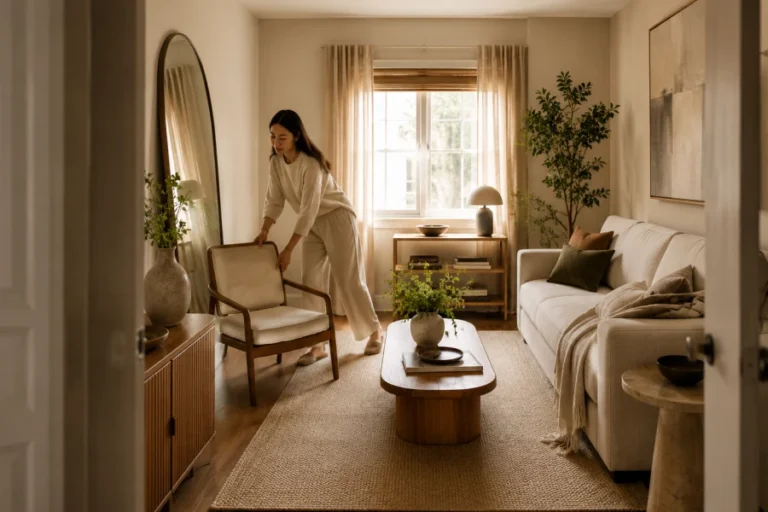
Rooms work best when people can move through them without hesitation. Keep the route between doorways clear, even when the room is small. Pull furniture away from traffic lanes instead of forcing people around it. Use flexible furniture choices that match changes in your household routine. A lightweight chair can move easily for movie nights or visitors. A slim table can become a desk, serving spot, or plant stand. Consider where you set down groceries, coats, and daily essentials. Those moments shape how a room feels far more than a staged photograph. Flow makes a compact home feel capable, generous, and easier to enjoy.
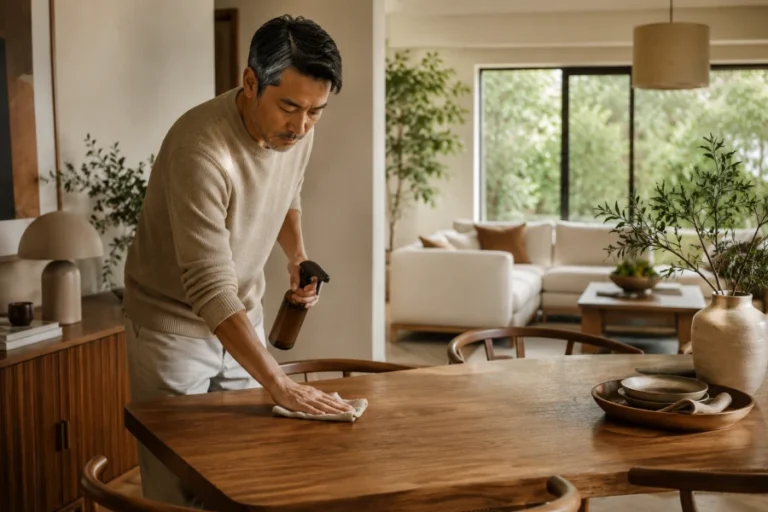
Space-saving home design becomes meaningful when the home feels easier to care for. Fewer obstacles make vacuuming, tidying, and hosting feel less demanding. A well-edited layout also helps you notice what matters most. Try open layout styling that keeps useful zones connected without making them identical. Let one room shift naturally from weekday routines to weekend gatherings. Keep surfaces open enough to support spontaneous moments. Leave a little room for fresh flowers, a favorite book, or a coffee tray. Your home should feel prepared for real life, not frozen for display. When every choice has a reason, even a compact room can feel surprisingly abundant.

Leave a comment