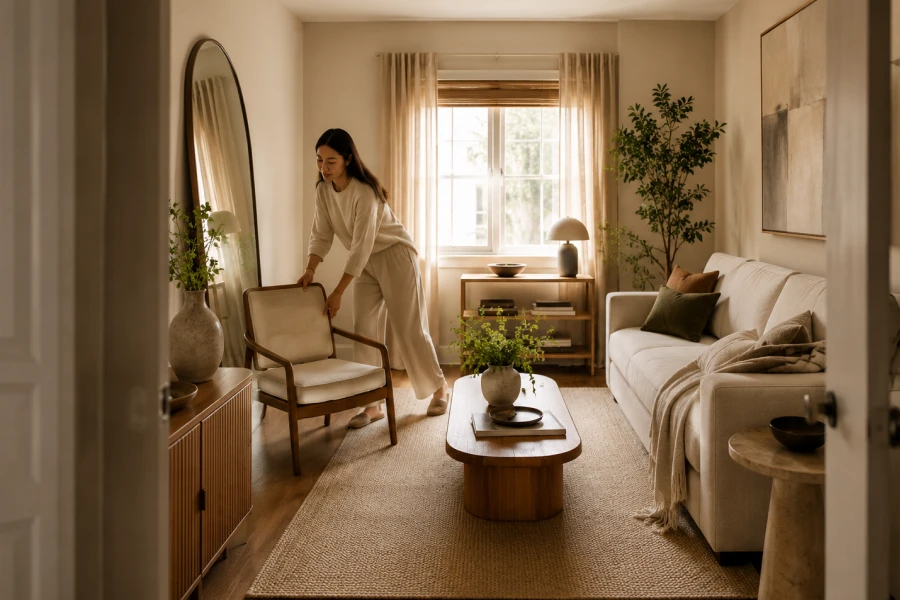
Small rooms can feel generous when every visual choice supports breathing room. Strong small room design ideas begin with noticing how your eyes travel. A crowded path makes even a stylish home feel smaller. Meanwhile, clear pathways create an immediate sense of welcome and possibility. Start by standing at the doorway and studying the first impression. Remove anything that blocks the natural view across the space. Choose one focal point instead of several competing visual moments. Let larger furniture support the room rather than dominate it. Even modest changes can make daily routines feel calmer. The goal is not emptiness, but a layout that feels intentionally open.
Think of sightlines as the quiet architecture of a comfortable room. Your gaze should move easily from one meaningful area to another. A low sofa often preserves more openness than a tall, heavy option. Position chairs where they encourage conversation without interrupting circulation. Try visual space planning before buying another decorative piece. This approach reveals which items actually earn their footprint. Keep the center of the room as clear as possible. Smaller rugs can accidentally fragment the floor into awkward sections. Instead, select a rug that gathers the seating area together. One continuous visual field makes the room feel composed and more expansive.
Natural light becomes more powerful when furniture does not interrupt it. Avoid placing bulky bookcases directly beside windows whenever possible. Sheer curtains soften daylight without cutting the room into shadows. Mirrors can reflect a pleasing view or brighten a dim corner. Place them where they extend light rather than create visual noise. Consider the finish of furniture as carefully as its size. Pale wood, warm cream upholstery, and glass accents can feel lighter than dark solids. Keep tabletops selective so daylight reaches their surfaces. A brighter room usually feels more inviting before any new objects arrive. This is why layout changes often matter more than expensive redecorating.
Furniture should fit the rhythm of the room, not simply its measurements. A large sectional may offer comfort but overwhelm a narrow living area. Look for compact furniture layouts that preserve movement around each piece. Chairs with exposed legs show more floor and appear visually lighter. Nesting tables work beautifully because they expand only when needed. A slim console can replace a deep storage cabinet near an entry. Choose armchairs with softer profiles instead of thick square shapes. Every object should serve the room in more than one way. Scaled pieces make seating feel intentional rather than squeezed. The result is a space that supports company without sacrificing ease.
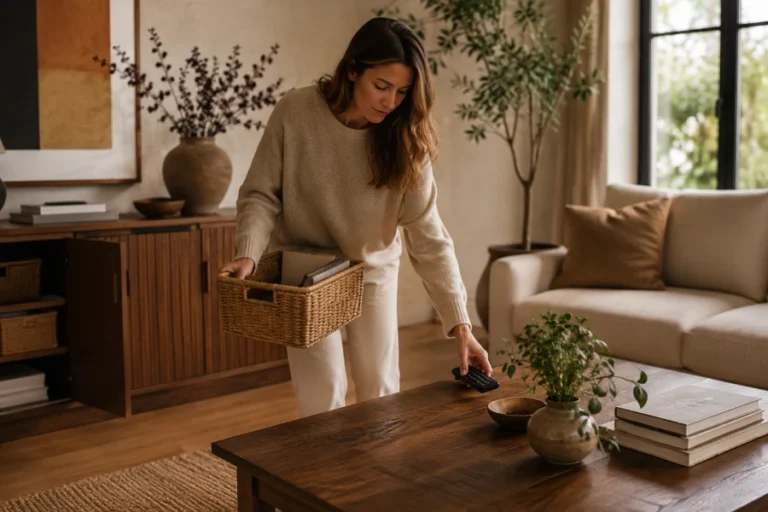
Small spaces become stressful when ordinary belongings have no clear destination. Begin with the items that collect most quickly each week. Remote controls, chargers, mail, and blankets need easy homes nearby. Closed storage keeps necessary items available without making them visually dominant. Open shelving works best when it holds a limited number of attractive essentials. Use baskets where the household naturally drops loose objects. Keep one drawer or bin empty for temporary overflow. This prevents a busy day from becoming a permanent mess. The best storage systems are almost invisible during daily life. Simplicity matters because routines fail when they require unnecessary effort.
Walls offer valuable space when floor area is limited. A single tall cabinet can replace several scattered storage pieces. Floating shelves keep necessities accessible while allowing the floor to remain visible. Explore vertical storage ideas that match the room’s existing architecture. Hang art slightly higher when it helps draw the eye upward. Long curtains can also create the impression of taller ceilings. Avoid filling every wall from edge to edge. A few clear sections of wall make the room feel more relaxed. Use height to create rhythm, not another layer of clutter. Vertical balance gives compact rooms a more graceful, finished presence.
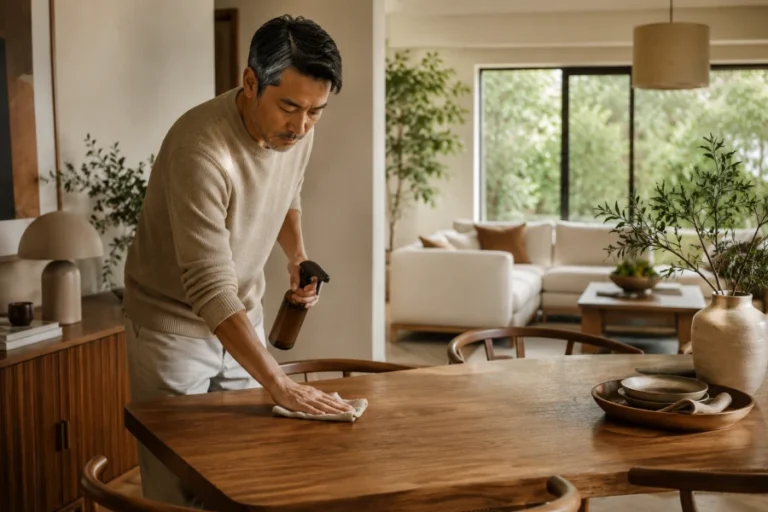
Finishing a room often means editing instead of adding. Choose decor that supports a feeling rather than merely filling a surface. Limit collections to the pieces you genuinely enjoy seeing every day. Practice minimal visual clutter by leaving breathing room around favorite objects. A room feels more personal when its details have space to register. Rotate seasonal accents instead of displaying everything at once. Keep colors connected through a small, repeatable palette. Notice whether each item adds warmth, function, or emotional value. When nothing is competing for attention, the space becomes more restorative. That quiet clarity is what makes a small room feel remarkably generous.


Leave a comment